
Why Your First Interpretation Isn't Always the Truth
We often react to the first story our minds create. Pausing to gather information and consider other explanations can bring us closer to what is true.
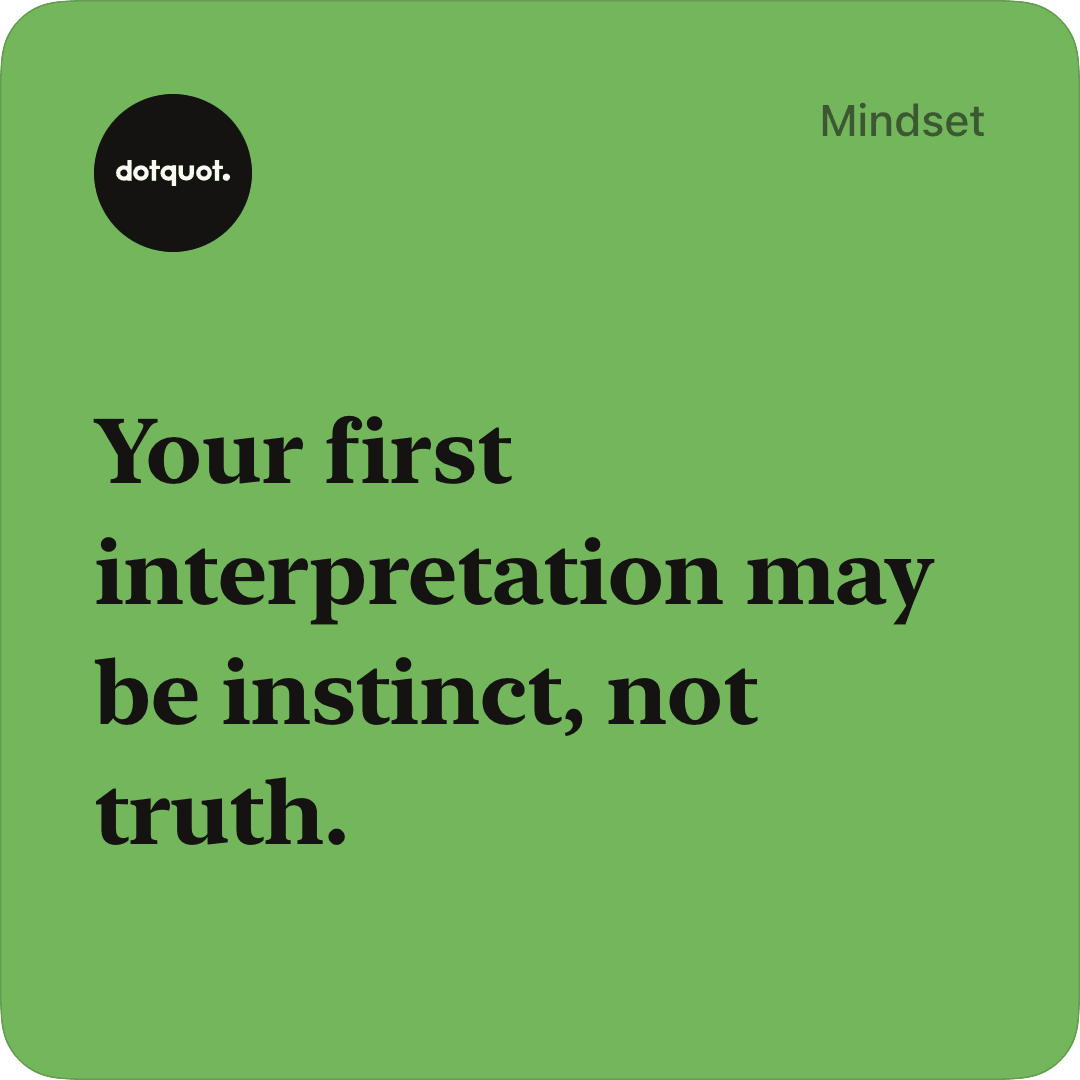
We tend to believe that the way we see something is the way it actually is. When someone says something we don't like, we assume we understand what they meant. When something goes wrong, we quickly decide what caused it. But our first interpretation of a situation isn't always accurate. Sometimes we're reacting to what we think is happening, rather than what's actually happening.
Past experience shapes what we see
Our minds are influenced by past experiences, emotions, habits, and beliefs. These influences affect how we interpret the world, often without us realizing it. If you've had a bad experience with someone, you might assume that another person with similar behavior has the same intentions. But similarities don't necessarily mean the situations are the same.
We explain what we do not yet know
Consider how easily misunderstandings happen in everyday conversations. Someone doesn't respond to your message, and you assume they're ignoring you. A friend seems unusually quiet, and you wonder if you've done something wrong. A colleague questions your idea, and you interpret it as criticism. In each case, you've created an explanation without necessarily having enough information to know whether it's true.
Feelings are not always facts
This is one reason why self-awareness and critical thinking are so important. We need to recognize that our thoughts aren't always reliable representations of reality. Just because something feels true doesn't mean it is. Our minds can convince us of things that aren't supported by the facts, especially when strong emotions are involved.
Instinct is useful but imperfect
Of course, instincts can be useful. Experience sometimes helps us recognize problems before we've had time to think them through. But intuition isn't infallible. The same mental shortcuts that help us make quick decisions can also cause us to overlook important information or reach the wrong conclusions.
Question the first story
One of the best habits we can develop is learning to question our initial reactions. Instead of immediately deciding what someone meant or why something happened, consider other possibilities. What information might you be missing? Could there be another explanation? Are you responding to the situation itself, or to a story you've created about it?
Aim to become less wrong
We won't always get things right. Our understanding of the world will always be limited, and there will be times when we misjudge people and circumstances. But we can become less wrong by being more mindful of how we think.
Wait before making up your mind
Don't assume your first interpretation is the correct one. Give yourself time to observe, ask questions, and learn more before making up your mind. Sometimes a little patience is all it takes to see things differently.