
Why Some Problems Keep Coming Back and How to Break the Cycle
Recurring problems can reveal patterns in how we respond. Combining persistence with self-awareness and learning helps us reconsider approaches that keep difficulties alive.
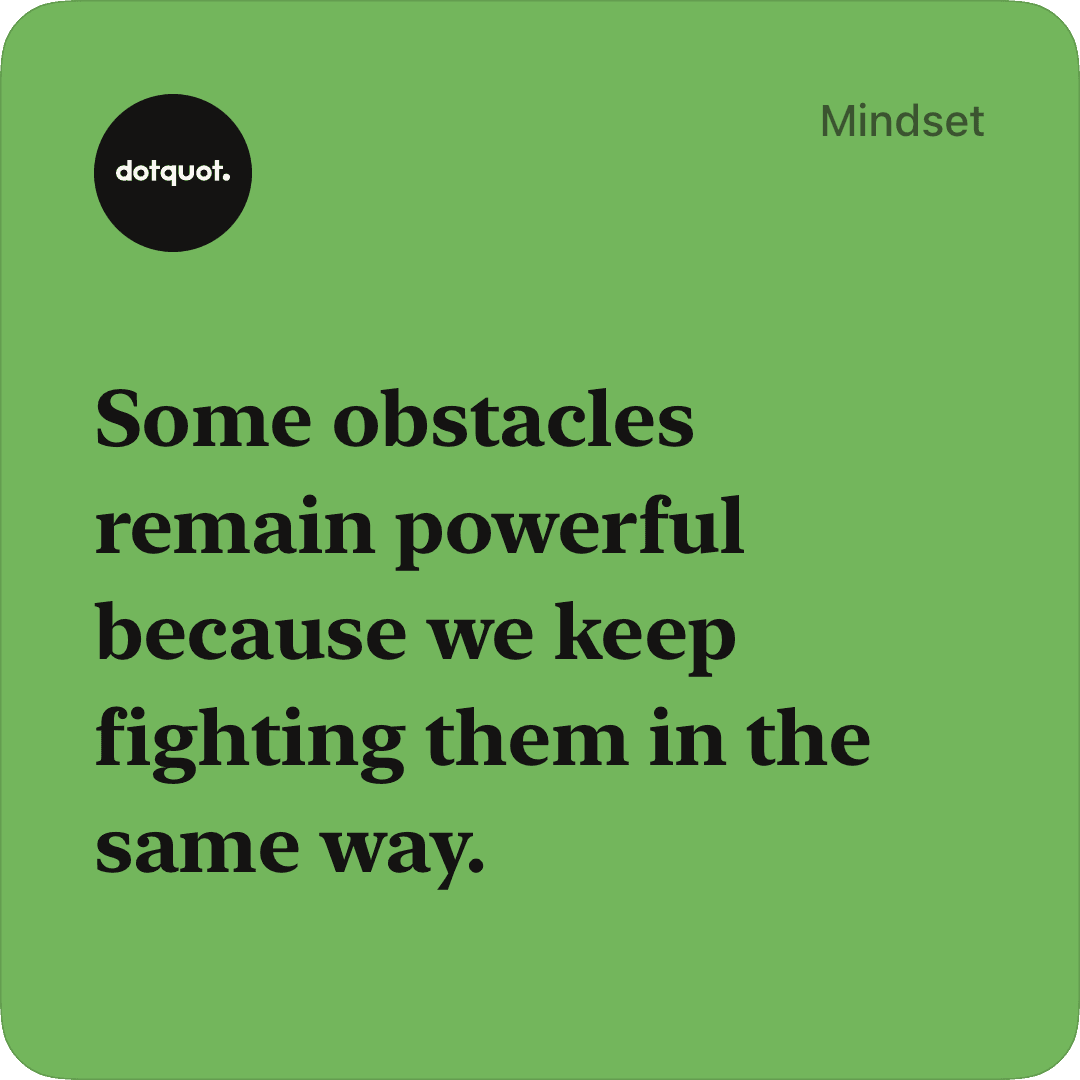
We all have problems that seem to follow us through life. We try to solve them, become frustrated when things don't improve, and eventually find ourselves dealing with the same difficulties again. Sometimes the circumstances are beyond our control. But sometimes the problem continues because we're responding to it in ways that aren't helping.
One of the difficulties with problem-solving is that we become attached to familiar methods. When something doesn't work, our first instinct is often to try harder. We put in more effort, repeat the same actions, and hope that persistence will eventually produce a different result. Sometimes it does. But sometimes we're simply repeating a mistake.
Think about how we deal with difficult people. Someone says something that annoys us, and we respond with anger. They become defensive, and the disagreement gets worse. The next time something similar happens, we react the same way. After awhile, we begin to believe that the other person is the entire problem. But our response might also be contributing to the conflict.
The same thing happens with personal habits. We might repeatedly try to become more disciplined by making strict rules for ourselves. When we fail to follow them, we become disappointed and try again with even stricter rules. Perhaps what we need isn't more discipline in the form of additional rules, but a better understanding of why we keep failing to follow the ones we've already made.
This is where self-awareness becomes important. We need to examine not only the obstacles we're facing, but how we're responding to them. Are our actions making the problem smaller or larger? Are we learning anything from our previous attempts? Or are we simply becoming more frustrated while continuing to do the same things?
Of course, not every obstacle can be overcome by changing our attitude or behavior. Some problems are genuinely difficult, and some circumstances can't be changed. We shouldn't assume that every failure is the result of our own mistakes. But even when the problem is outside our control, we can usually make some decisions about how much time and energy we're going to spend fighting it.
Sometimes the most sensible response is to stop trying to force an outcome. We can step away from an argument, abandon a method that isn't working, or accept a situation that can't be changed. That doesn't necessarily mean giving up. It might mean recognizing that our efforts would be more useful somewhere else.
One useful habit is to occasionally look at the problems that keep returning in your life. Are there patterns in how you respond? Are you repeatedly making the same assumptions or decisions? And what might happen if you approached the situation differently?
We won't always recognize our own mistakes. Some of our habits are so familiar that we don't notice them anymore. That's why it helps to remain open to advice and different perspectives. Someone else might recognize something we've been overlooking.
Persistence is valuable, but it needs to be accompanied by learning. Otherwise, we can spend years struggling against the same obstacles without making much progress.
Before putting more effort into a problem, consider whether your approach is part of what's keeping it alive. Sometimes the obstacle doesn't need to change as much as the way you're dealing with it.