
Why one thoughtful quote can be better than an endless feed
More content can fill a minute without giving it meaning. One carefully chosen thought creates a natural place to stop.
An endless feed is very good at offering a next thing. Another post appears before the current one has settled. Another idea replaces the last. Even when the content is thoughtful, the structure encourages movement rather than attention.
One quote creates a different kind of moment. There is no automatic next item demanding a decision. You can agree, disagree, remember something, or close the app. The experience has an ending built into it.
More is not always more useful
A feed can show you a hundred worthwhile thoughts. That does not mean you will carry one of them into the rest of your day. When ideas arrive too quickly, each one has less room to become specific: specific to a conversation, a decision, a worry, or a hope already present in your life.
A single quote narrows the field. Instead of asking, “What else is here?” you can ask, “What does this bring to mind?” That small change turns content from something to consume into something to consider.
Attention needs somewhere to land
Reflection takes a little time after the words arrive. You may notice a phrase that irritates you, a memory that changes its meaning, or a question you cannot resolve yet. None of this requires a long session. It only requires that the next item does not immediately push the first one away.
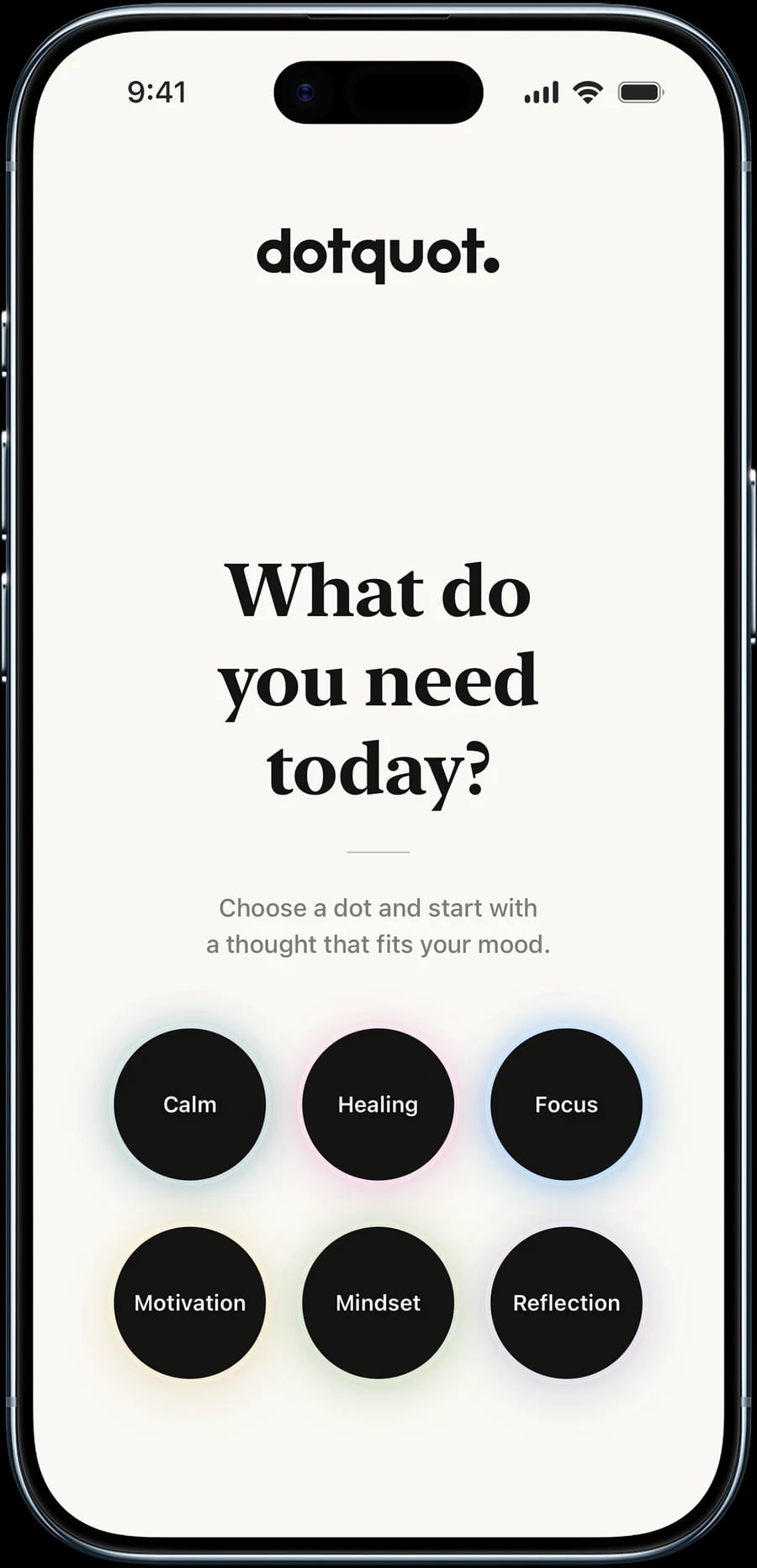
This is why DotQuot begins by asking what kind of thought you need today. Choosing Calm, Focus, Healing, Motivation, Mindset, or Reflection gives the moment a direction. It does not guarantee that every quote will feel perfectly timed. It simply replaces a broad stream with a more deliberate starting point.
Returning can matter more than collecting
Feeds are organized around what comes next. A reflective practice can also be organized around what is worth returning to. Saving a quote, turning it into a wallpaper, or finding it again through a past Dot gives one thought a longer life without requiring more content.
That return may reveal something new. The words have not changed, but the day has. A quote that felt obvious in one moment may feel difficult or generous in another.
A one-minute practice
You do not need to treat every quote as wisdom or every pause as profound. A lighter practice is often easier to keep honest:
- Read the quote once without trying to interpret it.
- Read it again and notice the phrase that holds your attention.
- Name one reason it fits—or does not fit—your day.
- Keep it if you want to return; otherwise, let it go.
One is sometimes enough
There is nothing inherently wrong with a feed, and one quote cannot replace curiosity, books, conversation, or careful learning. The difference is intention. A feed is useful when you want to explore. One thought is useful when you want to pause.
Some moments need breadth. Others need a boundary. Choosing one thoughtful quote is a small way to give your attention that boundary—and then return the rest of the minute to your life.