
Why Acceptance Sometimes Comes After You've Tried Everything
Knowing when to keep trying and when to accept reality requires honest effort and judgment. Reassessing progress and costs can help us recognize when to move on.
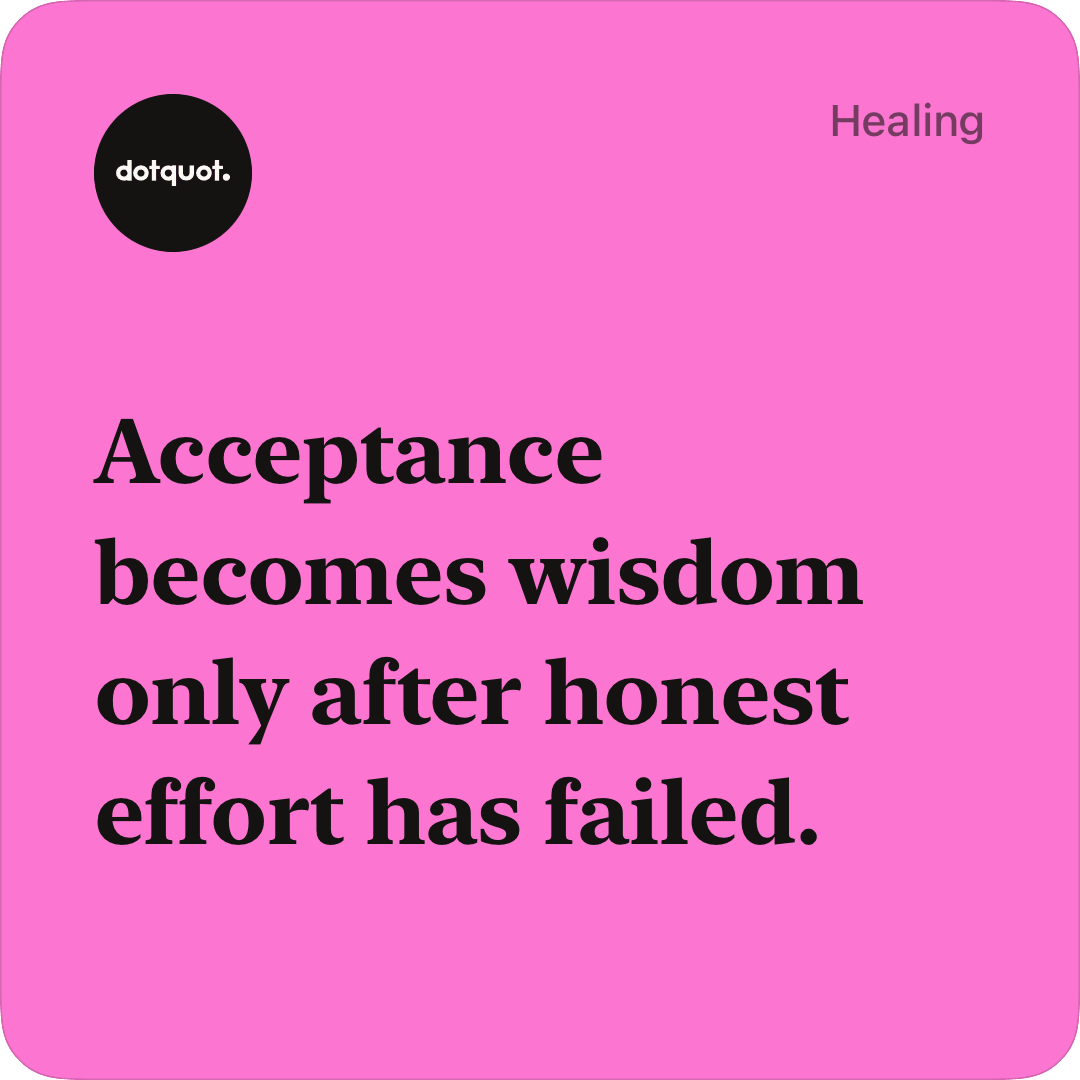
We often hear that we should learn to accept things we cannot change. It's sensible advice, but knowing what we can and cannot change isn't always easy. Sometimes we need to make an effort before we can know whether something is beyond our control. And sometimes what looks like acceptance is merely an excuse for not trying.
Think about how we deal with problems in our relationships, work, or personal lives. We might decide that something is hopeless because our first attempt didn't work. Or because we imagine that trying will be difficult or uncomfortable. But there's a difference between knowing that something cannot be improved and assuming that it cannot be improved.
One of the difficulties with acceptance is knowing when we've done enough. There's no simple rule that tells us how much effort a particular problem deserves. Some things are worth fighting for over many years. Others aren't worth spending another day on. We have to consider what's at stake, how much influence we actually have, and what we're giving up by continuing.
Consider a relationship that has become difficult. You might try to communicate better, understand the other person's concerns, and correct some of your own behavior. Those efforts might improve the relationship. But if the problems continue despite sincere attempts to resolve them, you may eventually have to accept that the relationship cannot become what you hoped it would be. At least not through your efforts alone.
The same principle applies to our ambitions. We can work hard, make good decisions, and still fail to accomplish something important to us. Effort improves our chances, but it doesn't guarantee success. There are circumstances, limitations, and sometimes simple bad luck that we cannot overcome through determination alone.
This doesn't mean every failure should lead to acceptance. Sometimes we need a different approach, better information, or more time. What failed once might work under different circumstances. But we should be realistic about the probability of success and the price we're paying to continue trying.
There's also a tendency to become emotionally attached to our efforts. The more time we've invested in something, the harder it becomes to walk away. We don't want to believe that years of work might not produce the result we wanted. So we continue, sometimes long after the evidence suggests that our efforts would be better spent elsewhere.
Accepting reality can be difficult because it requires giving up the future we've imagined. We might have to acknowledge that a particular dream won't come true, that someone won't change, or that something we've lost cannot be recovered. Those are unpleasant truths. But refusing to accept them doesn't make them less true.
Of course, acceptance doesn't mean that disappointment disappears. You can recognize that something is beyond your control and still feel sad or frustrated about it. There's no need to pretend that a loss doesn't matter. Give yourself time to adjust, but don't allow that disappointment to prevent you from enjoying the other parts of your life.
One useful question is whether continuing to fight a particular problem is likely to make your life better. Are you making meaningful progress? Is there a realistic possibility of improvement? Or are you repeating the same efforts because you're unwilling to accept the outcome?
Sometimes the most sensible decision is to keep trying. Other times it's to change direction. And sometimes it's to stop.
There's no wisdom in giving up before you've made a reasonable effort. But there's also no wisdom in spending the rest of your life fighting something you cannot change.
Do what you reasonably can. Learn from the experience. And when there's nothing useful left to do, allow yourself to move on.