
Why We Shouldn't Rush Children Into Growing Up
Children need guidance and preparation, but also time to play, explore, and enjoy being young. Their present deserves care alongside their future.
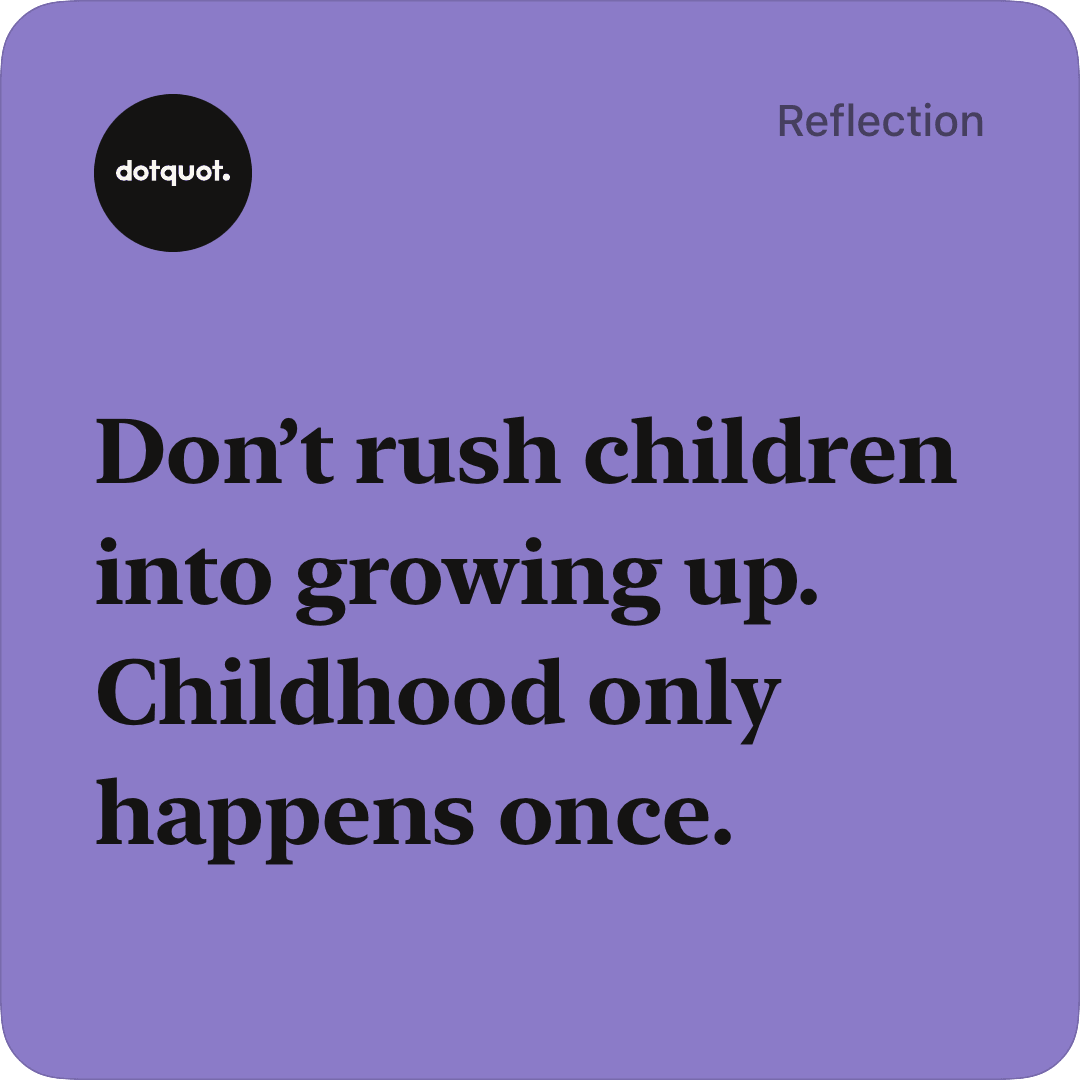
We spend much of childhood preparing children for adulthood. We teach them to be responsible, disciplined, and independent. We want them to do well in school, develop useful skills, and be prepared for the challenges they'll eventually face. Those are worthwhile objectives. But sometimes we're so concerned with preparing children for the future that we forget they're living a part of their lives that they'll never get to experience again.
One of the problems with raising children is that we tend to see their lives through our own expectations. We want them to succeed, avoid the mistakes we made, and take advantage of opportunities we might not have had. But what we think is best for them isn't always what they need at that particular stage of life. Sometimes they need less instruction and more time to simply be children.
Think about how much of a child's day can become occupied with responsibilities. Schoolwork, extracurricular activities, lessons, and expectations about achievement. Some of these things are important. But children also need time to play, explore, make friends, and do things that don't have a particular objective. Not every moment needs to contribute to their future success.
We sometimes underestimate the value of those ordinary childhood experiences. Playing with friends, spending time outdoors, being curious about the world, or enjoying the company of family. These things might seem less important than developing skills or preparing for examinations. But some of the most meaningful memories people carry into adulthood come from moments when they weren't trying to accomplish anything.
Of course, childhood shouldn't be free of responsibilities. Children need guidance, discipline, and opportunities to learn how to deal with difficulties. Protecting childhood doesn't mean protecting children from every unpleasant experience. Some challenges are necessary for developing confidence, judgment, and independence.
But we should be careful about placing adult expectations on people who aren't adults yet. A child doesn't need to know exactly what they want to become. Their interests will change, their abilities will develop, and they'll discover things about themselves that neither they nor their parents could have anticipated.
There's also a difference between helping children grow and trying to make them grow faster. We can encourage learning without turning every interest into an achievement. We can teach responsibility without making childhood feel like a long preparation for something more important.
One useful question for parents is whether their expectations are improving their child's life or simply satisfying their own ambitions. Are we giving children opportunities because those experiences are good for them? Or because we want them to become something we've already imagined?
We won't always get parenting right. There are no perfect parents, and children are different from one another. What works well for one child might not work for another. We have to keep learning, make adjustments, and remember that our understanding of what children need will always be incomplete.
Adulthood will bring responsibilities that children can't yet fully understand. There will be pressures, disappointments, and difficulties they won't always be able to avoid. There's no need to introduce all of those burdens before they're necessary.
Prepare children for the future, but don't make their present merely about preparation. Give them opportunities to learn, develop good habits, and become capable people. But also give them time to enjoy being young.
Childhood is part of life, not simply something to get through before real life begins. And once it's gone, there's no way to get it back.