
Why Self-Discipline Is Better Than Years of Neglect
Neglect often feels inexpensive in the moment, but its consequences accumulate. Small, consistent acts of discipline can prevent larger problems and preserve more choices for the future.
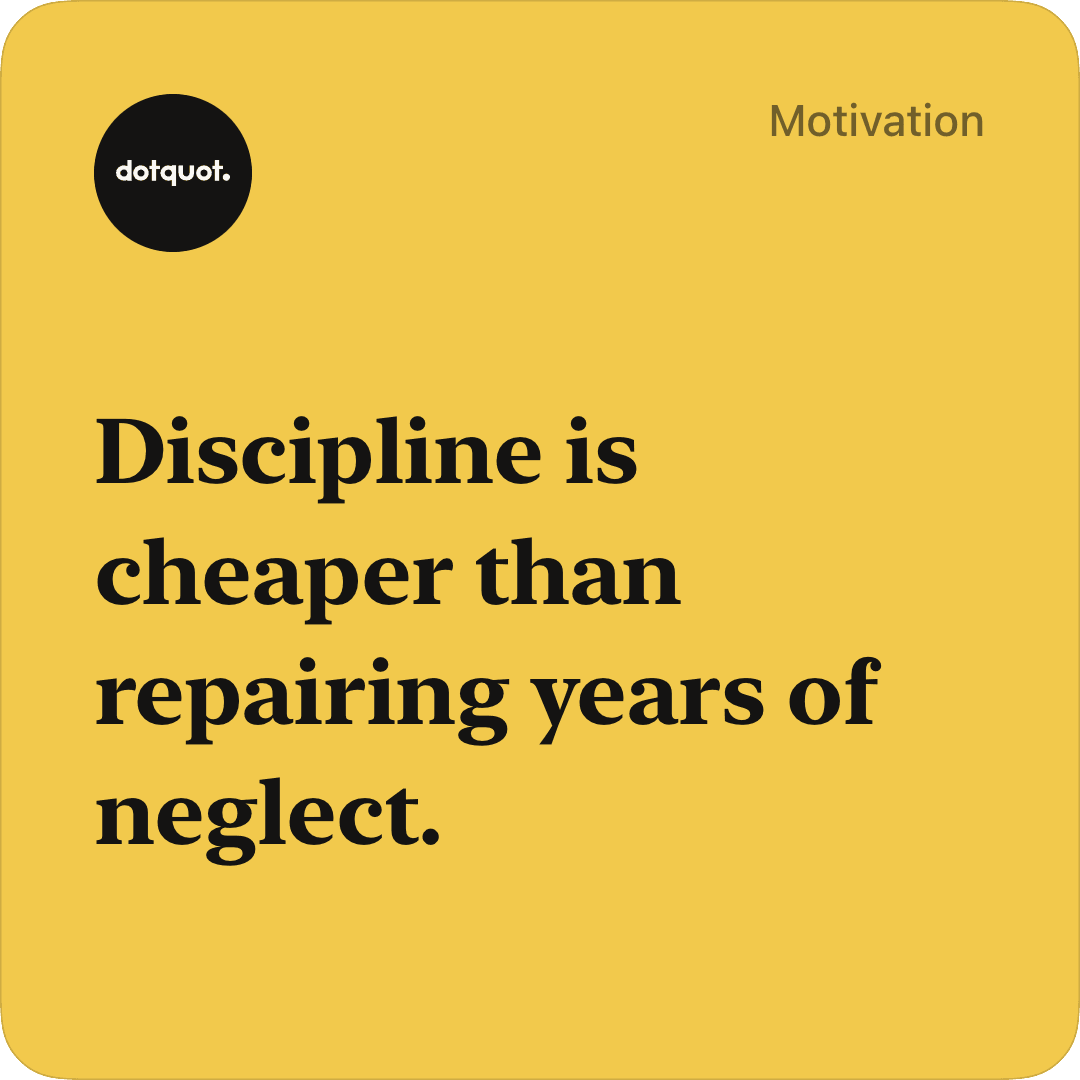
We tend to put off things that don't seem urgent. Taking care of our health, managing our finances, learning new skills, or correcting bad habits. We know these things are important, but there always seems to be something else that needs our attention. The problem is that neglect has a way of accumulating, and the consequences aren't always apparent until much later.
Neglect accumulates quietly
Think about how we take care of our health. Eating poorly for a day or skipping exercise for a week might not make much difference. But when those choices become habits, the effects can add up over months and years. Eventually, we might find ourselves trying to correct problems that could have been avoided with a little more discipline.
Small financial compromises become expensive
The same is true of money. Spending more than we earn doesn't always create immediate problems, especially when credit is available. But debt accumulates, and interest makes it more expensive. Saving money and living within our means might require some sacrifices now, but those sacrifices are often small compared to the difficulties that financial neglect can create later.
Prevention rarely feels dramatic
One of the biggest problems with self-discipline is that the benefits aren't always visible. We tend to notice the things we're giving up more than the problems we're preventing. Getting enough sleep, exercising regularly, and managing our time wisely don't necessarily produce dramatic results overnight. But that doesn't mean they're not working.
Discipline does not mean rigidity
Of course, being disciplined doesn't mean having to live a rigid or unpleasant life. There are times to relax, enjoy ourselves, and make exceptions. Being too strict can create its own problems. The objective isn't perfection. It's developing habits that make life better rather than harder.
Discipline improves the odds
We also need to recognize that some problems are outside our control. People who take excellent care of their health can still become seriously ill. People who manage their money wisely can still experience financial difficulties. Discipline doesn't guarantee that everything will turn out well. It simply improves our chances and helps us avoid some unnecessary problems.
Look at what you are neglecting
One useful way to approach personal growth is to identify the things we're neglecting. What responsibilities have we been putting off? What habits are likely to create problems if we continue them? And what small changes could we make now that might save us considerable trouble in the future?
Start before circumstances force you
We don't have to change everything at once. Small improvements, repeated consistently, can make a substantial difference over time. The important thing is to start making those changes before circumstances force us to.
Choose the effort that leaves more options
Discipline requires effort, but so does dealing with the consequences of neglect. The difference is that one gives us more control over our lives, while the other often leaves us with fewer options.