
How to Stop Making Excuses and Start Improving Your Life
Excuses can protect us from discomfort while keeping us stuck. Honest self-awareness, fewer obstacles, and small consistent changes can help us move forward.
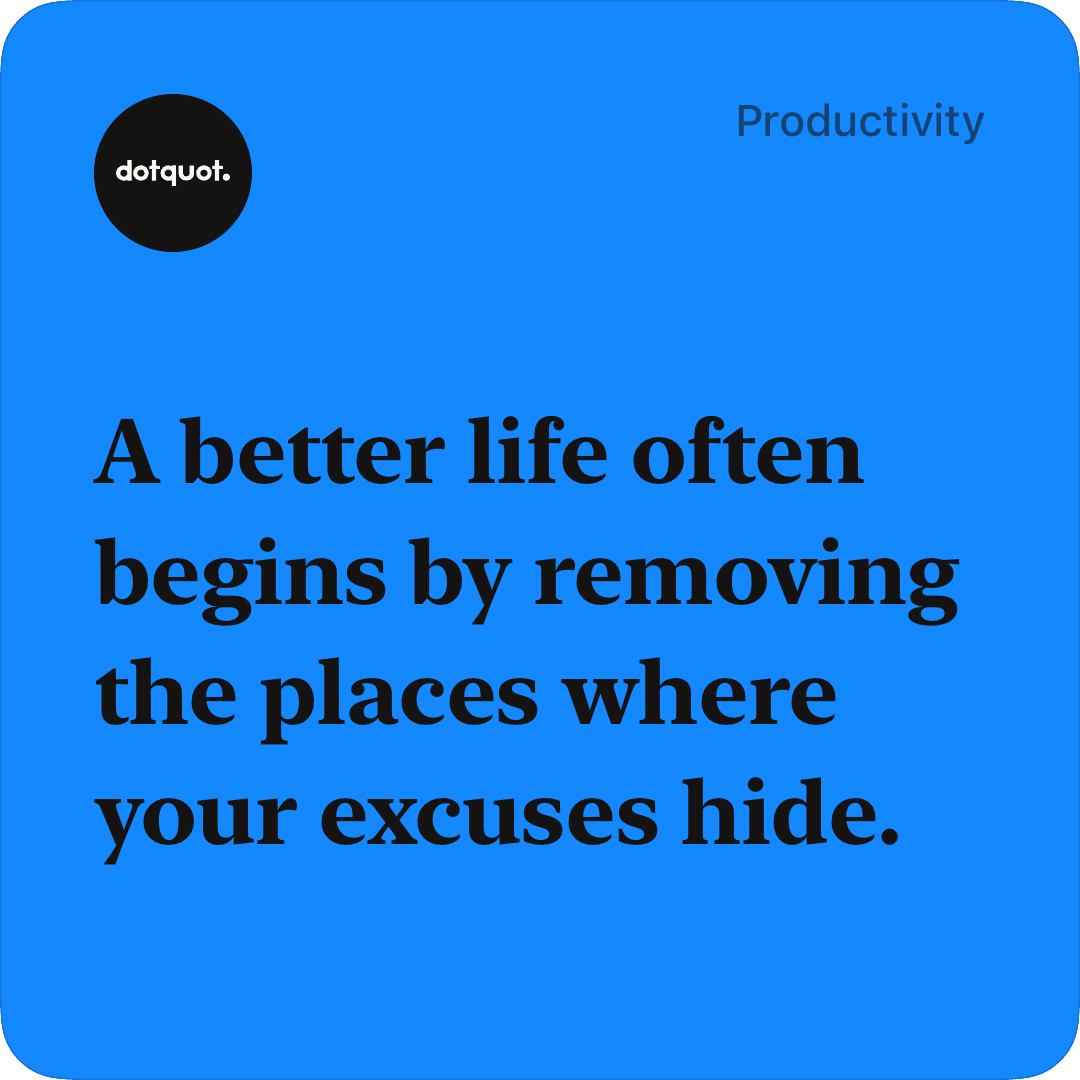
We all make excuses. Sometimes we do it knowingly, but often we don't realize we're doing it. We tell ourselves that we don't have enough time, that circumstances aren't right, or that we'll make changes when things become easier. Some of those reasons are legitimate. But others are simply ways of avoiding things we know we should be doing.
Excuses can sound reasonable
One of the biggest obstacles to personal growth is our ability to justify our own behavior. We can come up with good reasons for almost anything. If we aren't exercising, we're too busy. If we're not learning something new, we don't have the time. If we're spending too much money, we tell ourselves that we deserve to enjoy life. Sometimes these explanations are reasonable. But sometimes they're just excuses.
Knowing is not the difficult part
Making positive changes doesn't always require a complicated plan. Often, we already know what needs to be done. We need to get more sleep, manage our money better, eliminate bad habits, or give more attention to the people who matter to us. The difficulty isn't necessarily in knowing what to do. It's in doing it consistently.
Be honest about what is stopping you
This is where self-awareness becomes important. We need to be honest with ourselves about why we're not making progress. Are there genuine obstacles preventing us from moving forward? Or have we become comfortable with explanations that allow us to avoid making an effort? It's not always easy to tell the difference, especially when we've been repeating the same excuses for years.
Some limits are real
Of course, not every problem can be solved through determination. There are limitations we can't overcome, circumstances we can't change, and responsibilities we can't simply walk away from. It's important to recognize those realities. But we should also be careful not to underestimate what we can do within those limits.
Remove what keeps getting in the way
One useful approach is to start by eliminating the things that are getting in your way. If you're easily distracted, remove some of the distractions. If certain habits are damaging your health or finances, work on changing them. If you're spending too much time on things that don't matter, reconsider your priorities. You might find that improving your life requires doing fewer things rather than adding more.
Start small and stay consistent
We tend to look for major changes that will transform our circumstances. But small improvements, made consistently, can produce significant results over time. You don't have to fix everything at once. Start with the things that are within your control and work from there.
Know the difference between limits and excuses
Be honest about your limitations, but also about your excuses. There's a difference between accepting what you can't change and avoiding what you can.
Make standing still less comfortable
Sometimes the best way to move forward is to stop making it so easy for yourself to stand still.