
How Expectations Can Make You Unhappy With the Present
Imagining a better future can make us overlook the value of the present. Realistic expectations help us pursue worthwhile goals while appreciating the life we have.
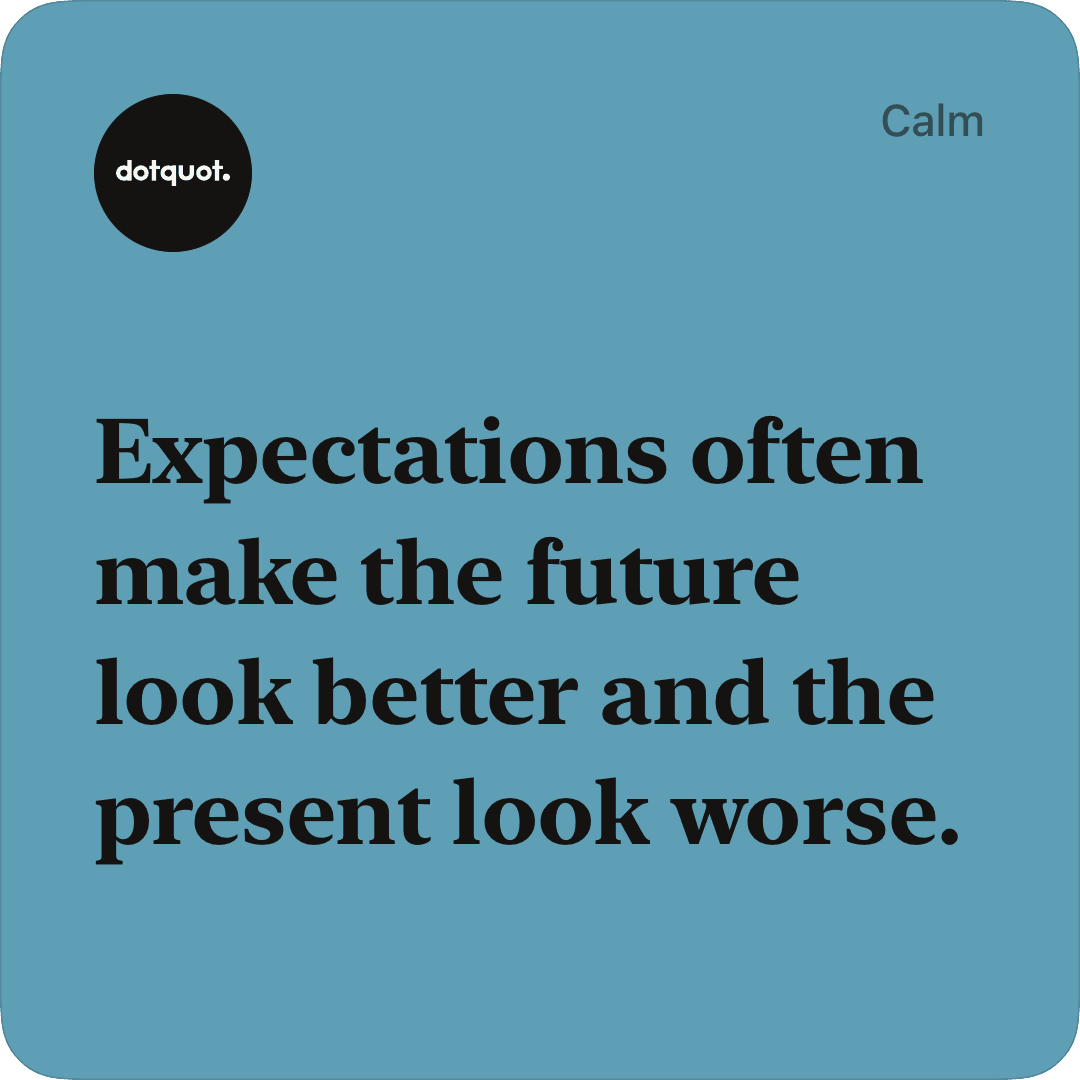
We spend a lot of time imagining how much better life will be in the future. We think about the things we want, the problems we'd like to solve, and the circumstances we hope to have someday. There's nothing wrong with looking forward to better days. But sometimes our expectations make us so dissatisfied with the present that we fail to appreciate what's already good about our lives.
One of the problems with expectations is that they're based largely on our imagination. We picture what life will be like when we have more money, a better job, or fewer responsibilities. But we're usually imagining the good parts of those circumstances. We don't give nearly as much thought to the new problems that might come with them. Reality is almost always more complicated than the version we've created in our minds.
Think about how often you've wanted something that eventually became ordinary once you had it. A new home, a promotion, or something you've saved money to buy. At first, it feels like an important improvement. But after awhile, you get used to it. You begin noticing its shortcomings, and something else starts to look more appealing. What once seemed like enough no longer feels like enough.
The same thing happens when we imagine how we want our days to unfold. We expect people to behave a certain way, our plans to work out, and our responsibilities to be manageable. When reality doesn't match those expectations, we become frustrated. Sometimes the situation isn't particularly bad. It's simply different from what we imagined.
This doesn't mean we shouldn't have goals or make plans. We need some idea of where we're going and what we're trying to accomplish. But we should recognize how limited our ability is to predict what will make us happy. Some of the things we want won't be as good as we expect. And some of the best experiences we'll have are things we couldn't have planned.
There's also an opportunity cost to constantly thinking about the future. Every moment spent imagining a better life is a moment we're not fully experiencing the one we have. We can become so concerned with getting somewhere else that we overlook the things we'd miss if they were suddenly gone.
One useful habit is to occasionally examine what you're expecting from life. Are your expectations realistic? Are you making your happiness dependent on circumstances you can't fully control? And are you overlooking something valuable because you're too focused on what you don't have?
Of course, there are circumstances that genuinely need to improve. Not every dissatisfaction is the result of unrealistic expectations. Sometimes we need to make changes, solve problems, or remove ourselves from situations that aren't good for us. Acceptance shouldn't become an excuse for avoiding necessary action.
But we should also recognize that no future will be completely free of problems. There will always be something that isn't quite the way we want it to be. If we can't find some satisfaction in an imperfect present, there's no guarantee we'll find it in a different future.
Work toward the things that matter to you. Make sensible plans and look forward to better days. But don't allow your expectations to convince you that the life you're living now has little value.
One day, you might look back and realize that some of the things you were hoping to find in the future were already part of your life.